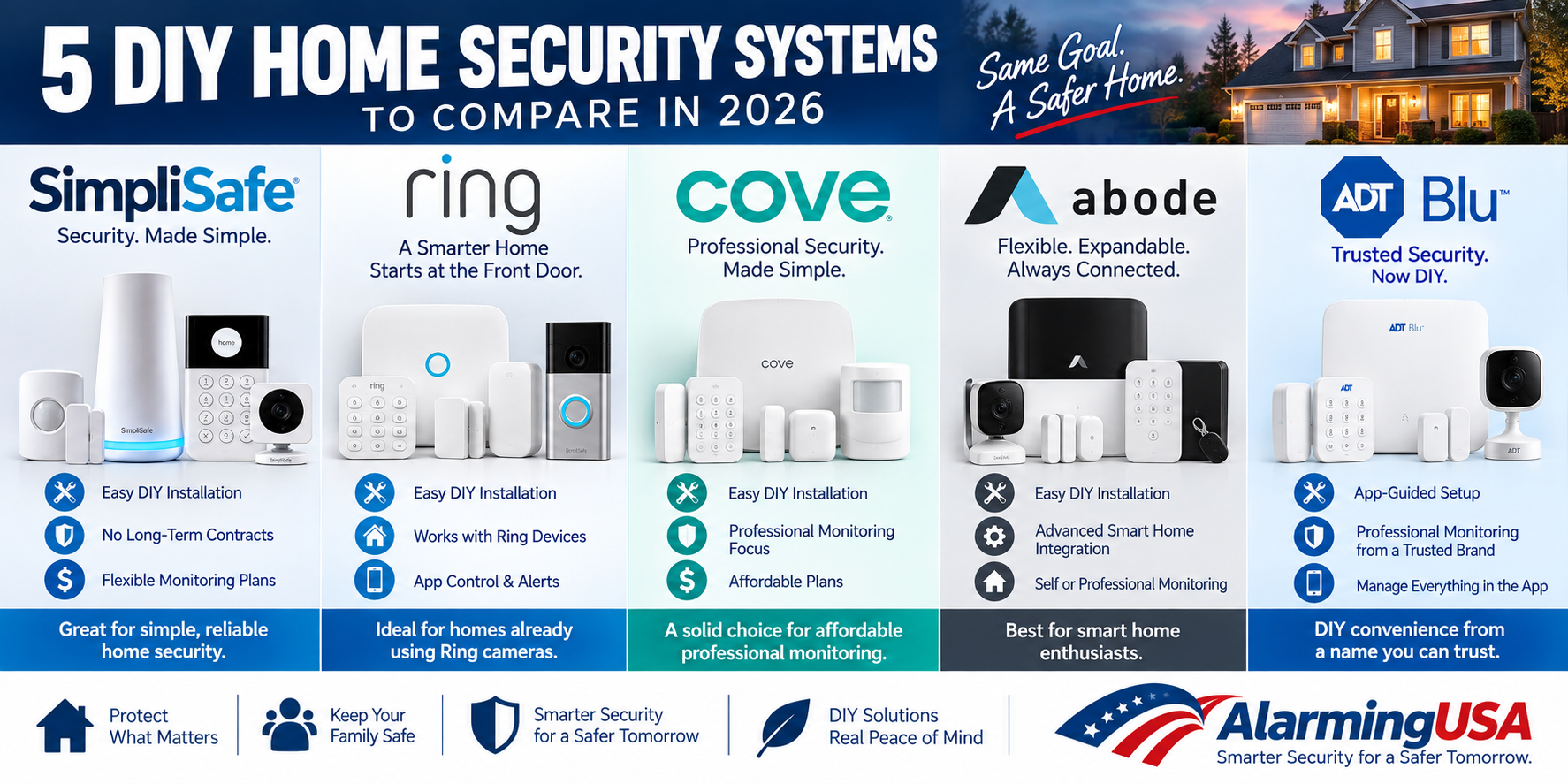
DIY home security systems have changed significantly, giving homeowners and renters more choices for self-installation, app control, cameras, smart-home integration, self-monitoring, and professional monitoring. This comparison looks at five major options in 2026: SimpliSafe, Ring Alarm, Cove, Abode, and ADT Blu.
5 DIY Home Security Systems to Compare in 2026
There is no single DIY system that fits every household. Equipment compatibility, monitoring, cameras, automation, subscription features, and long-term costs all matter. The five systems below take somewhat different approaches, so this guide focuses on those differences rather than declaring one system the universal winner.
1. SimpliSafe
SimpliSafe is built around wireless DIY installation and a modular lineup of sensors, cameras, and safety devices. Buyers can choose a pre-built package or customize a system. SimpliSafe currently offers unmonitored use plus several paid monitoring levels, and its professional monitoring plans are month-to-month without long-term contracts.
Things to consider: Straightforward DIY installation, expandable equipment, multiple monitoring choices, and optional professional monitoring. More advanced monitoring and camera features require paid service levels.
For a deeper look, read our SimpliSafe review. We also have a SimpliSafe Entry Sensor installation guide and Entry Sensor battery guide.
2. Ring Alarm
Ring Alarm is particularly relevant for households already using Ring doorbells and cameras because alarm and video products can be managed within the Ring ecosystem. Ring’s 2026 subscription structure includes Ring Protect plans and optional services, with professional monitoring and advanced alarm features depending on the plan.
Things to consider: Strong fit for an existing Ring setup, broad camera and doorbell ecosystem, DIY-friendly alarm equipment, and app-based management. Video recording, cellular backup, professional monitoring, and other advanced features depend on the selected subscription.
3. Cove
Cove is another wireless home security option designed around self-installation and professional monitoring. Its approach is oriented toward users who want to install the hardware themselves while still having a monitored alarm service.
Things to consider: DIY installation and a professional-monitoring focus. Before purchasing, compare current equipment packages, monitoring requirements, camera choices, contract terms, and total recurring cost directly with Cove because offers and service details can change.
4. Abode
Abode combines DIY security with a strong smart-home focus. Abode currently advertises free self-monitoring, optional paid plans, and optional professional monitoring. Its ecosystem supports integrations including Apple HomeKit, Amazon Alexa, Google Home, Zigbee, and Z-Wave on compatible equipment.
Abode’s current plan structure includes a no-plan option, Standard, and Pro. The Pro level adds professional monitoring and cellular backup, while Standard adds features such as stored video clips, automations, and geofencing.
Things to consider: Broad home-automation compatibility and the ability to start with self-monitoring and change plans later. Buyers interested primarily in simple alarm operation may not need all of the automation capabilities.
5. ADT Blu
ADT introduced ADT Blu in 2026 as a self-installed, app-managed security system. It is designed to be installed by the customer and managed through the ADT+ app, with the ability to add professional monitoring. ADT describes Blu as modular, allowing equipment to be expanded over time.
Things to consider: DIY installation paired with ADT’s monitoring infrastructure, app control, expandable equipment, and no long-term contract for the Blu offering. Buyers should distinguish ADT Blu and current self-setup offerings from ADT’s traditional professionally installed packages, which can have different terms and requirements.
DIY Home Security Comparison
| System | DIY Installation | Self-Monitoring Option | Professional Monitoring | Notable Area |
|---|---|---|---|---|
| SimpliSafe | Yes | Yes | Available | Simple modular setup |
| Ring Alarm | Yes | Yes | Available with eligible service | Ring camera/doorbell ecosystem |
| Cove | Yes | Check current offering | Core focus | DIY hardware with monitoring |
| Abode | Yes | Yes | Available | Smart-home integration |
| ADT Blu | Yes | Available on eligible setup | Available | ADT ecosystem and monitoring |
What Should You Compare Before Buying?
- Equipment cost: Compare the actual sensors, hub, keypad, cameras, and accessories needed for your home.
- Monthly cost: Determine which features work without a subscription and which require a paid plan.
- Professional monitoring: Compare dispatch services, cellular backup, and monitoring terms.
- Cameras: Check recording, storage, resolution, and subscription requirements.
- Smart-home compatibility: Confirm compatibility with the platforms and devices you already use.
- Internet and cellular backup: Understand what happens if home internet service goes down.
- Contracts: Read current terms rather than assuming every DIY product is contract-free.
- Expansion: Check the cost and availability of additional sensors and cameras.
Which Type of DIY System Fits Your Needs?
A household already invested in Ring cameras may value Ring Alarm’s shared ecosystem. Someone prioritizing broad smart-home automation may want to examine Abode closely. SimpliSafe emphasizes straightforward modular DIY security with multiple monitoring choices. Cove emphasizes self-installed equipment with professional monitoring, while ADT Blu brings a newer self-install option into ADT’s ecosystem.
The right choice depends on the equipment and services you actually plan to use. Compare the complete system cost over several years—not just an introductory hardware price.
Final Thoughts
SimpliSafe, Ring Alarm, Cove, Abode, and ADT Blu all provide paths to DIY home security, but their ecosystems and service models differ. Before buying, make a list of the doors, windows, rooms, cameras, and safety devices you want to protect, then compare the equipment and recurring service needed to cover those specific requirements.
As AlarmingUSA adds individual reviews and DIY guides for these systems, this comparison can serve as a central hub linking to detailed installation, troubleshooting, and maintenance articles for each platform.